
The Inflation Butterfly Effect: How CPI and PPI Ripples Into PCE
A game-winning touchdown can change more than the score. It can move a team’s playoff chances and change the outlook for other teams in the same race. One throw can change not only several markets within its own game, but adjacent markets as well. A 90-yard touchdown from Jaxon Smith-Njigba should be boosting his Offensive Player of the Year market. Not only action, but inaction. If JSN gets hurt, or has a dud game, his OPOY odds will be calibrated which then changes the odds for those around him. Anything less is arbitrage. Not only are these adjacent bets, they are directly related to the underlying action.
Inflation markets have their own butterfly effect. A CPI or PPI release can change the outlook for PCE weeks before the official PCE number comes out. The connection’s real, but it’s less direct than a touchdown changing the score.
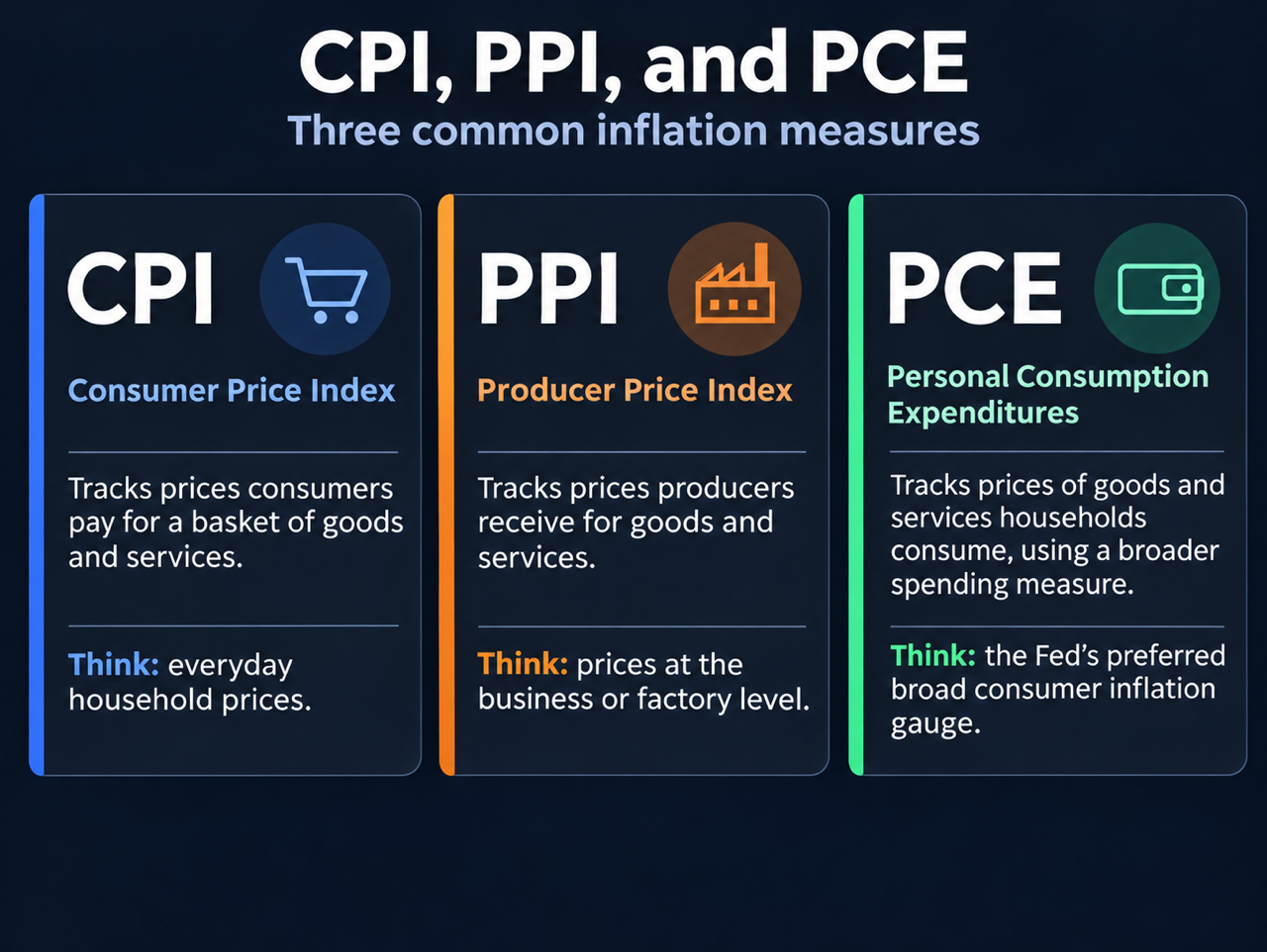
Three ways to look at inflation
The Consumer Price Index (CPI) tracks prices consumers pay. The Producer Price Index (PPI) tracks prices domestic producers receive. The Personal Consumption Expenditures (PCE) price index covers goods and services bought by households or on their behalf.
Headline PCE includes food and energy. Core PCE leaves them out. Seasonal adjustment is separate from that distinction.
How has inflation been trending?
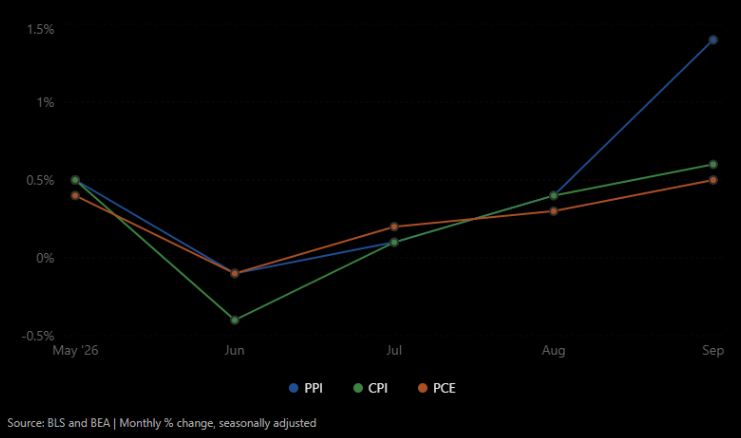
For prediction markets, the key is that many of the price inputs used to calculate PCE are already public by the time the PCE report comes out. That raises a question: how quickly do related markets reflect those inputs?
What goes into PCE?
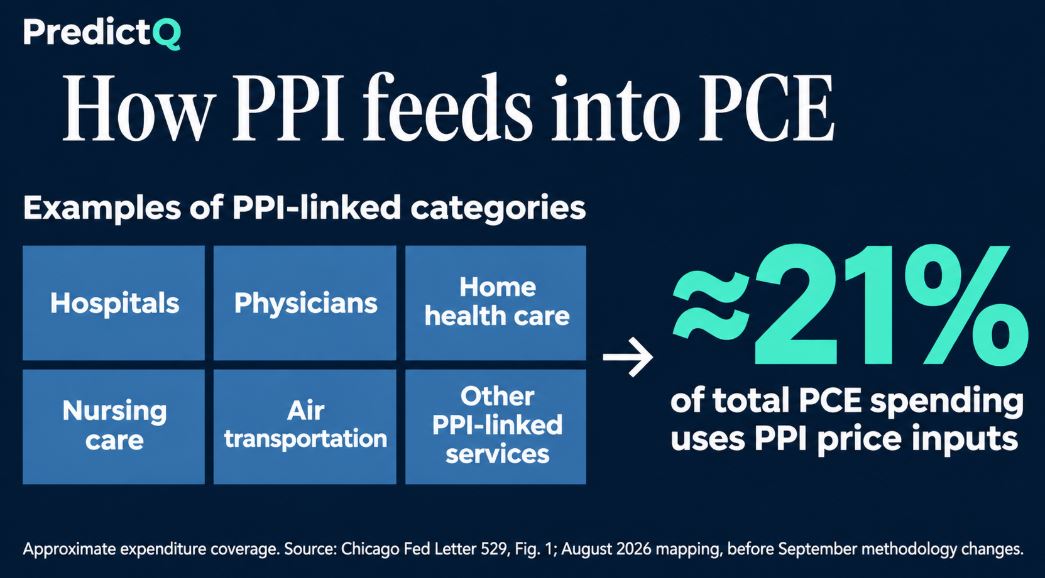
As the Chicago Fed explains, CPI supplies many of the inputs for things households pay for directly. PPI supplies prices for some categories where others pay on households’ behalf, such as certain health care services.
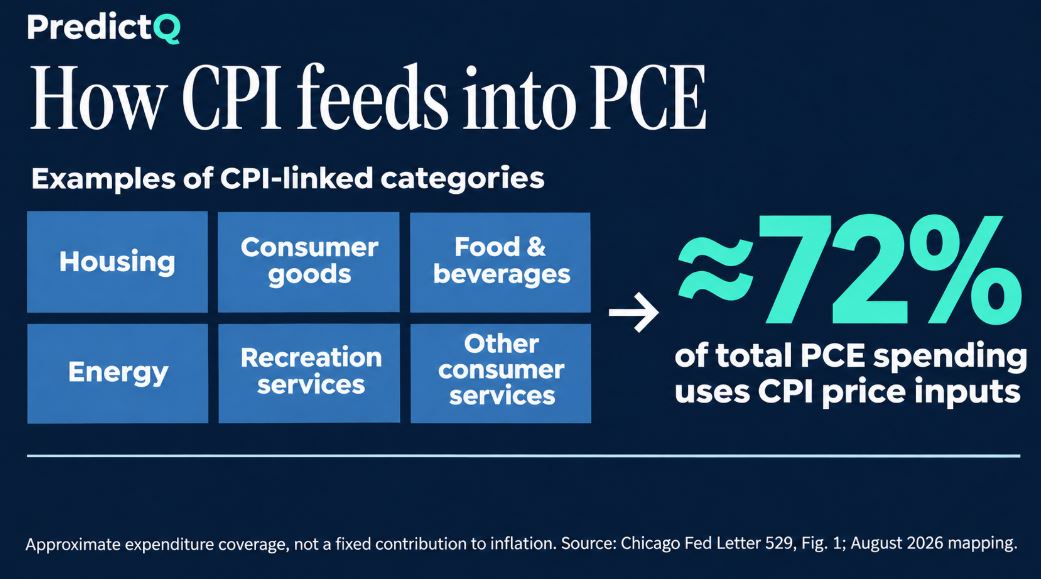
PCE has its own spending weights, coverage and calculation method. A hotter CPI report doesn’t guarantee an equally hot PCE reading, but the details can change the forecast before the official release.
What happened after the November CPI release?
After the Nov. 10, 2026, CPI release, Goldman Sachs raised its forecast for October core PCE from 0.23% to 0.35% month over month. That’s 0.12 percentage points higher. It was a forecast revision, not a PCE reading.
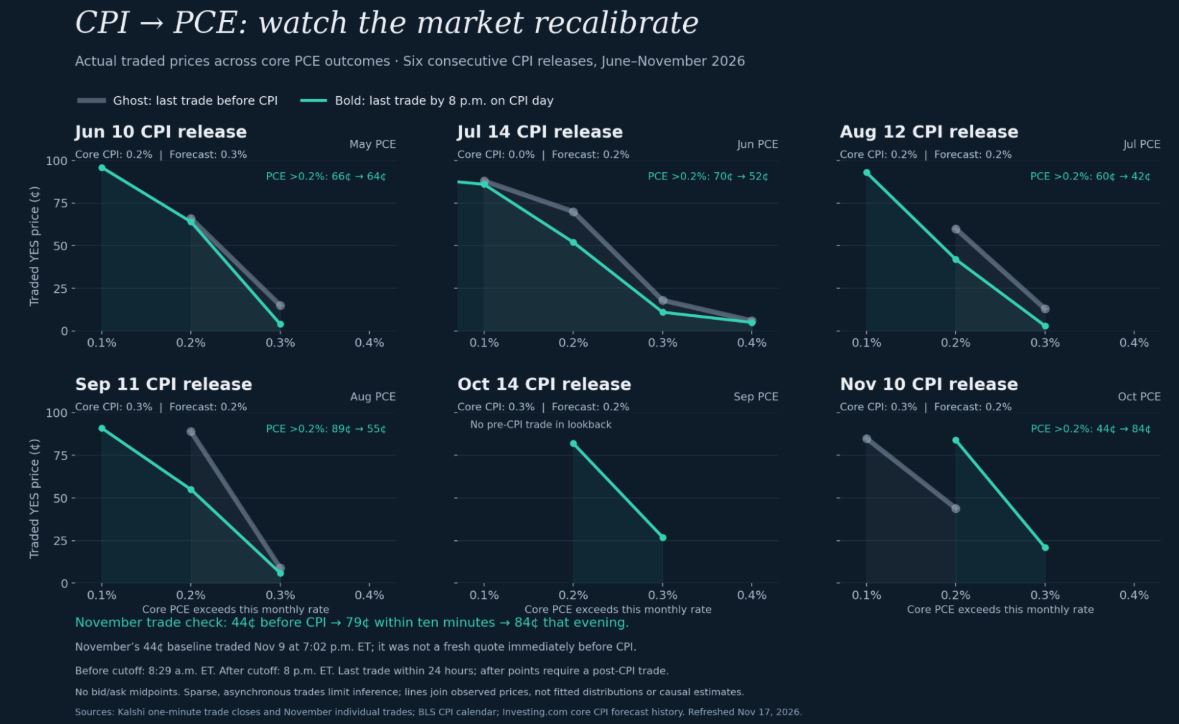
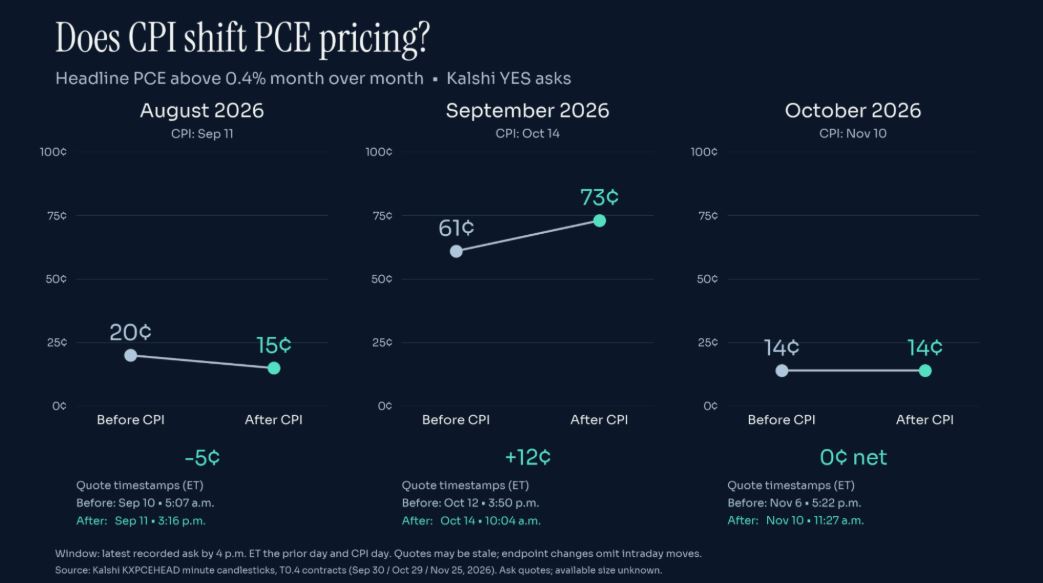
Headline PCE didn’t always move the same way. Across the three CPI releases shown below, the recorded Yes asks for headline PCE above 0.4% moved down once, up once and finished unchanged once. These are snapshots of asking prices, not completed trades.
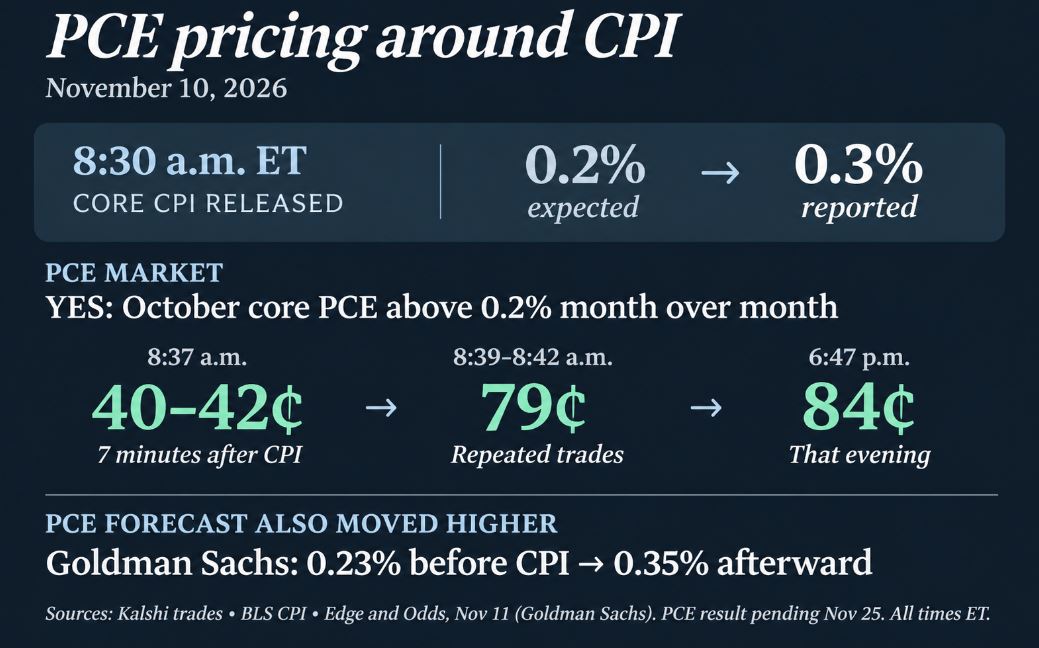
Kalshi’s trade records show how the October core PCE market repriced. On Nov. 10, in the contract asking whether October core PCE would exceed 0.2% month over month, Yes trades went through at 40–42 cents at 8:37 a.m. Eastern, seven minutes after CPI came out. At 8:39:49 a.m., trades were going through at 79 cents, with more at that price over the next few minutes. A trade later that evening went through at 84 cents.
The records show trades near 40 cents several minutes after CPI came out and trades at 79 cents by 8:39:49 a.m. That’s a record of executions, not a before-and-after snapshot of the order book. You don’t necessarily need a supercomputer or a quantitative trading desk to capture calibration to adjacent markets. Understanding which releases feed the eventual settlement number can help identify where to look. In this example, the relevant observations unfolded over minutes, not microseconds.
PCE comes out November 25th. This could be an interesting backtest to see where the drivers came from within the PCE Expenditures outside just the CPI and PPI data, and if they were large enough to drive the price.
What the trade tape can’t tell us
But a few trades don’t tell us how much was available at those prices or whether the same move will happen the next time CPI comes out.
That does not establish that every trader could have bought at 40 cents and sold at 79 cents. Historical executions do not show which offers remained available, and the later reporting of economists’ forecasts does not establish when those estimates first became actionable. It does, however, illustrate why “the data are public” and “the adjacent market has finished adjusting” deserve separate consideration.
For readers new to the exchange, PredictQ’s Kalshi guide explains how the platform works.
Who this article is for
Those interested in economics and politics. Inflation is a deeply personal category, it is one of the rare markets where the consumer can feel the market with their day-to-day habits.
This piece links to PredictQ’s guide to Kalshi, a PredictQ partner. If you sign up through our partner link in that guide, we may earn a commission at no extra cost to you. It helps keep the lights on here. This isn’t investment advice or a trade recommendation. Market prices can change.