
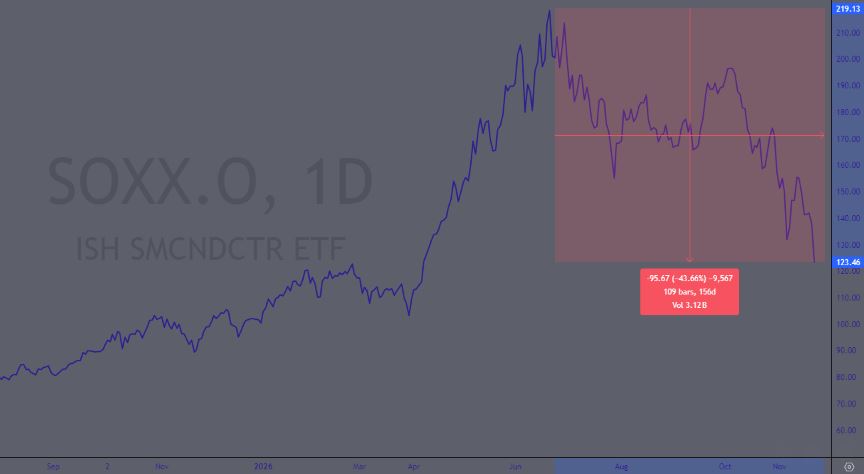
The saga continues. Jensen Huang has been reinstated as NVDA CEO. On Monday, 11/23/2026, the stock added over $1 trillion in market cap. The Nasdaq rose by over 7%, something that has only happened 19 times in its history. That is a near six-sigma move, or in layman’s terms, being born over seven feet tall or the weather being over 30 degrees above normal. It’s important to note that this comes directly after an aggressive sell-off this fall, ramping up post-election. The semiconductor ETF SOXX has experienced a ~44% drawdown from the summer.
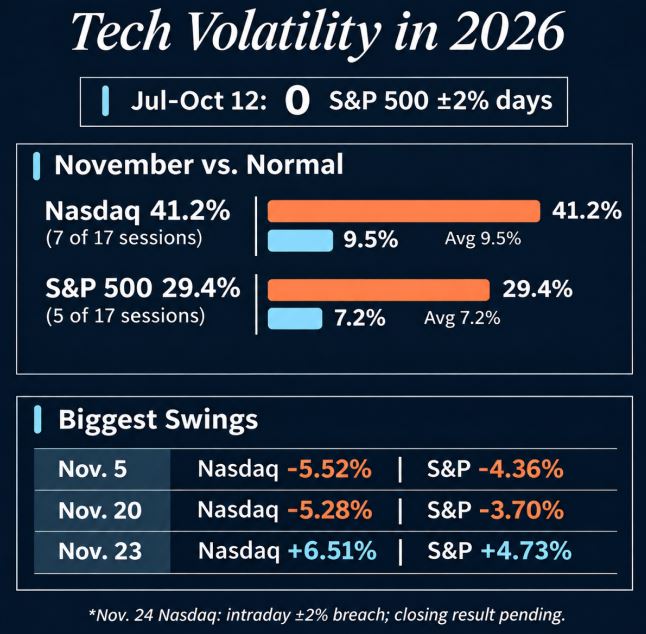
The VIX volatility index spiked to near 40 last week, levels not seen since the tariff announcements on ‘Liberation Day’ in spring 2025. That is quite a bit of volatility as of late, which can open opportunities slower markets cannot. I have identified three core reasons to help explain it:
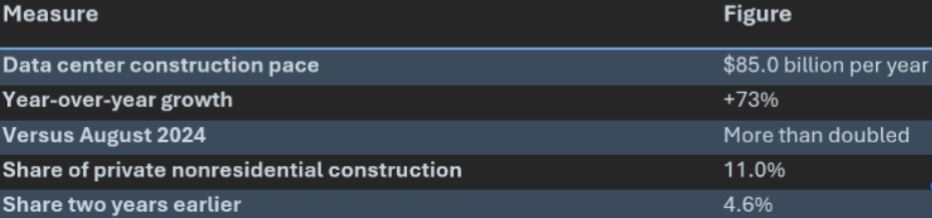
1) The AI trade One of the most common questions I get is, “Is the AI trade in a bubble?” I mean, Micron was up ~1,200% in less than two years… I think a healthy pullback is always expected, but these companies are not selling an idea of future growth like most tech companies. They are generating insane fundamentals with 1) high margins 2) explosive demand and 3) high barriers to entry. And it’s not slowing down, yet. McKinsey expects data centers to consume 10–15% of global power by 2030. Annual infrastructure spending as a percentage of GDP makes the AI build-out the biggest economic bet of all time in the USA. Bigger than the internet, highways, and even railroads. Now get this, only 7% of data centers are up and operating. That is significant construction and planning going on behind the scenes. The slow speed combined with the high capex spend has been an investor’s dream. .
But markets are forward-looking, and everyone is wondering when that capex may slow. Buy-the-rumor, sell-the-fact is a phenomenon in investing where investors aren’t going to wait until the music stops to cut winners. See Anthropic’s IPO. With chip stocks trading sideways this summer after their parabolic rise, the world’s leading AI CEO getting caught in a messy affair and stepping down was certainly enough to at least prick the bubble and let some air out. Now, Jensen is back, but I think we got a preview of the music stopping, and no equity is bulletproof. Breadth is also concerning. The market continues to get concentrated in big tech, towards the chip companies. 52% of 2026 S&P gains are from five stocks. 87% are from just 20 stocks.
2) Dems take control During elections, markets typically like certainty first vs. a contested or razor-tight race. The market initially rallied on the Democrats clinching with relatively little pushback from the Commander in Chief. Shortly after, stocks began to tumble, and it’s been a volatile month since. Overall, the US stock market is fairly agnostic to how DC is structured.
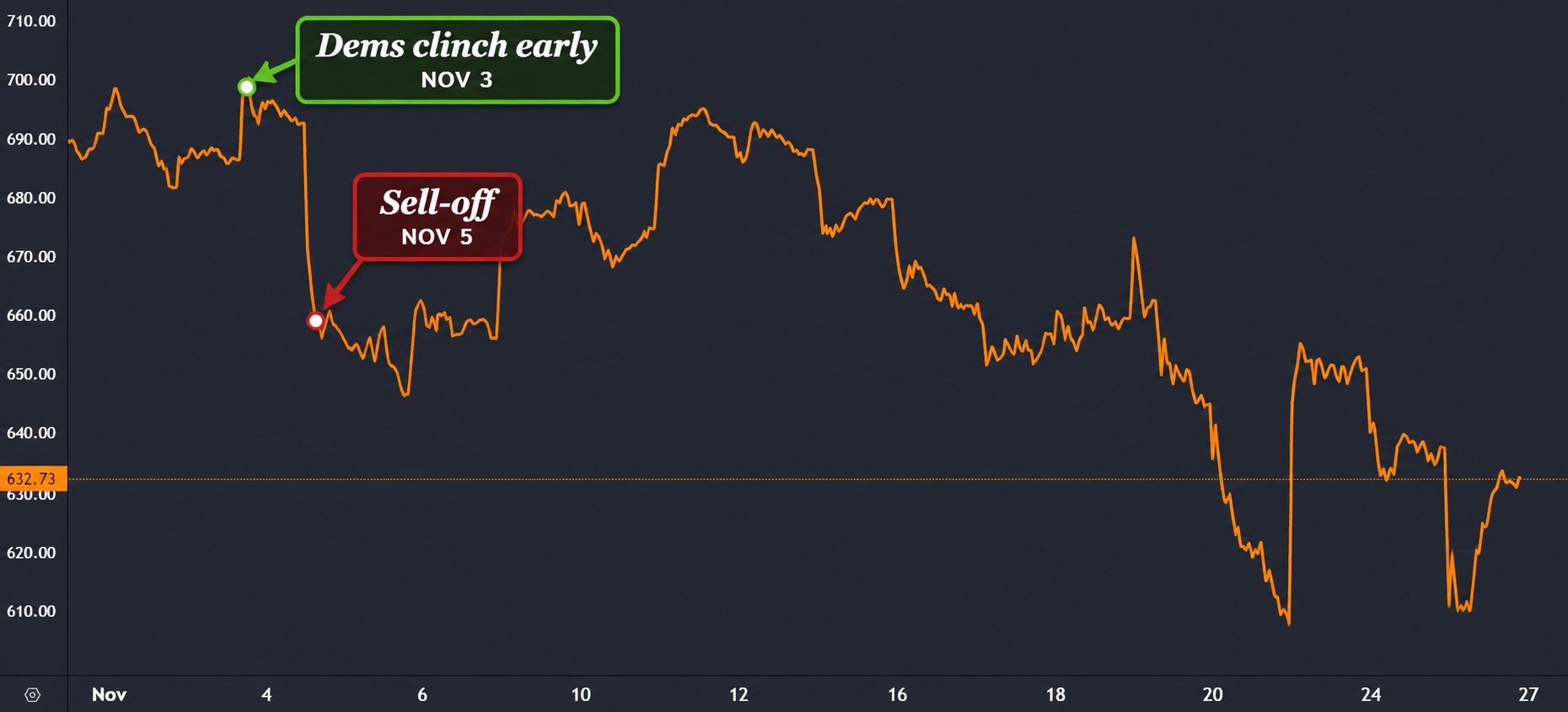
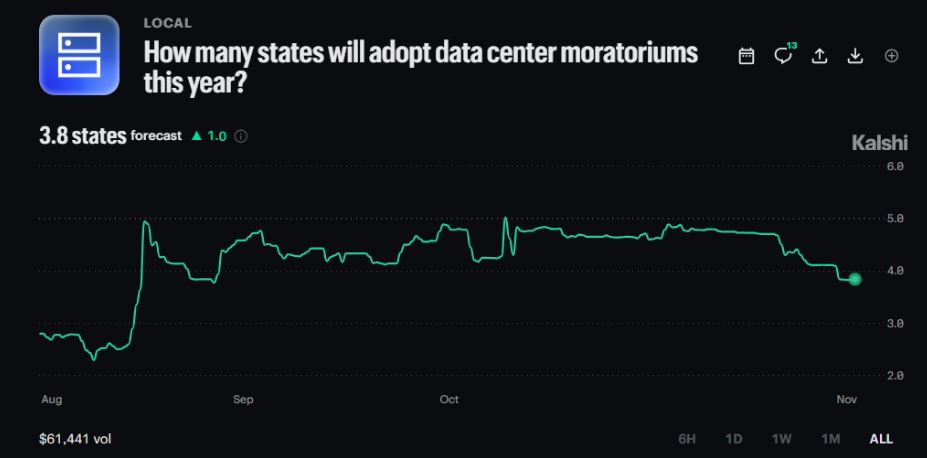
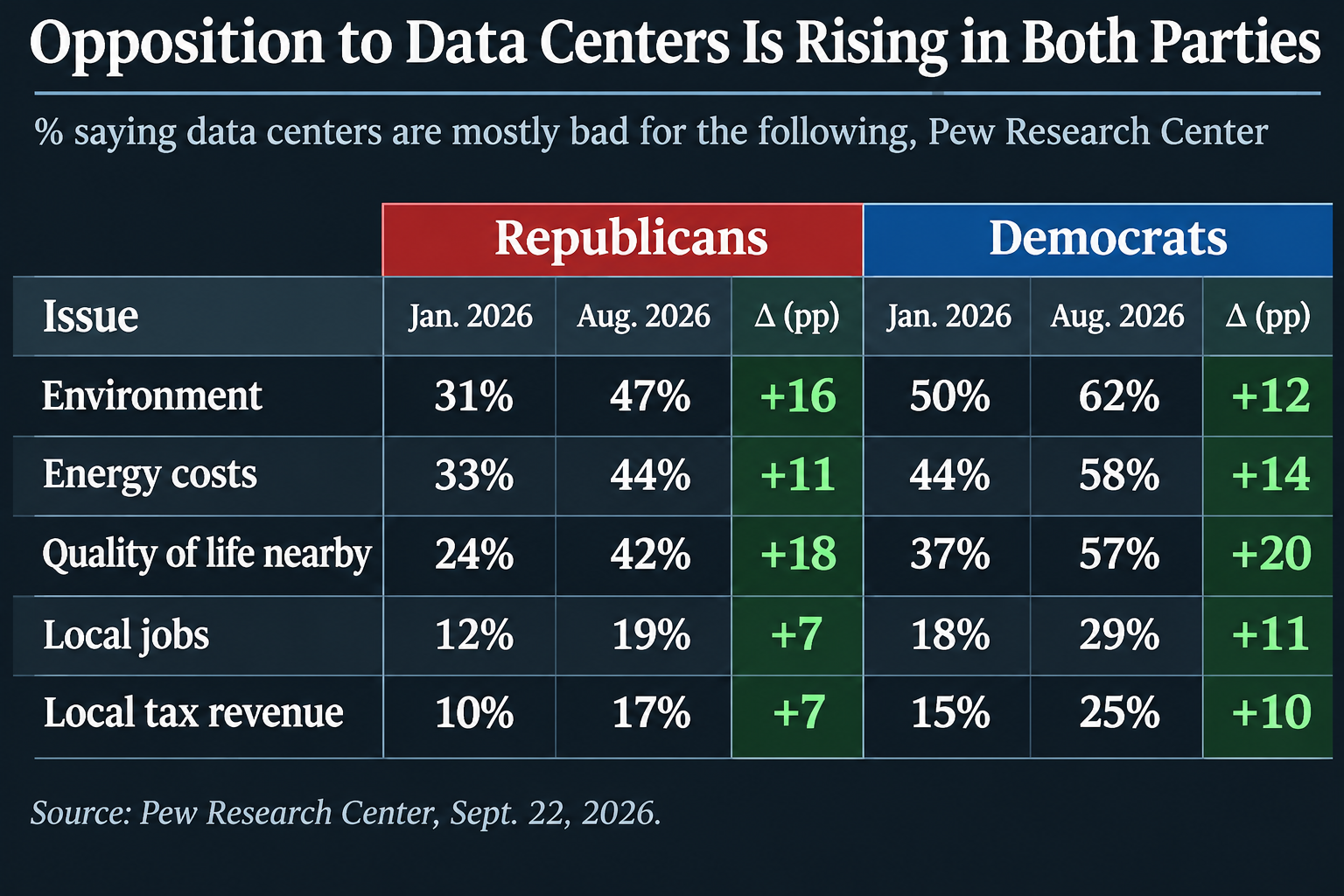
Historically, we see slight adjustments for certain sectors. However, midterms also shifted blue locally in gubernatorial races, and that might be even more telling concerning local data center construction (Texas) and moratoriums. Despite a recent Republican shift towards AI regulation, Democrats are seen as a potential constraint on the AI capex onslaught. Higher taxes, regulation, and pausing data center construction are enough to see investors scale back.
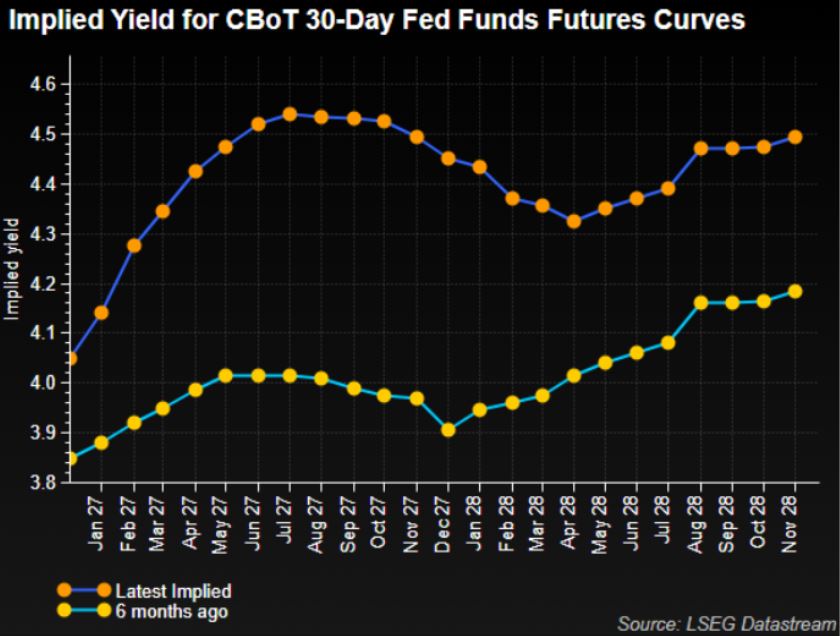
3) Hawkish Fed Seems like a short time ago the Fed was sitting pretty. Kevin Warsh was just appointed, and the Fed’s expected monetary path was fairly flat. Then the Iran war broke out, inflation started to heat up, and the labor market held steady, putting the Fed in the awkward spot of restarting the hiking cycle before Warsh’s “Taskforce” could make its necessary changes. Putting the Fed even further behind the eight ball, we had midterms near the FOMC meeting, which is an auto-hold. We now have a significant gap between the current Fed funds futures path and where it was this spring, widening to 50+ bps at the belly of 2027, with hikes coming in December and potentially January. The exhausting theme of higher for longer is the worst-case scenario for AI capex borrowing. First, we have companies that borrowed dirt cheap during COVID starting to refinance those five-year loans. Second, pick your poison between a fixed rate that’s generationally high and a floating rate forecasted to heat up in 2027.
The AI trade could continue despite any noise in DC or the capital markets, similar to refrigeration taking off in the 1800's despite an unfavorable political landscape. We have new pieces on the chess board and volatility can breed opportunity.
This article includes links to PredictQ partners. We may earn a commission if you use them. It doesn't cost you anything extra, and it helps keep the lights on here. Nothing in this piece is investment advice, and prices and market levels can change.