
Thanksgiving weather is dividing the market into three distinct groups: rain-favored eastern airports, generally dry Plains locations, and a narrow Midwest precipitation boundary where timing and precipitation type matter. The most interesting trades are not necessarily those with the highest probability of winning. They are those where an independent estimate of the exact settlement event differs enough from the quoted contract price.
This analysis ranks eight rain and snow contracts using purchase prices collected in the November 24–25 market review and forecast-based probability scenarios. These scenarios are judgmental estimates—not backtested or calibrated forecasts. Market prices, liquidity, and model guidance can change quickly, and some quotes in the list may already be stale.
What the Thanksgiving Forecast Is Saying
Detroit, Indianapolis, Cleveland, Columbus, and Pittsburgh face meaningful Thanksgiving rain risk. Around Chicago, precipitation is forecast to develop later in the day, while Milwaukee lies closer to the edge of the rain shield. Madison and Des Moines show much drier Thanksgiving forecasts, weakening the case for snow at their airports. Farther south, Atlanta could see precipitation during the early overnight hours, and Tampa retains some shower potential despite a drier NWS outlook.
That produces two different approaches to value: low-cost NO contracts where a small forecast adjustment can generate a large percentage edge, and more expensive snow NO contracts where the weather forecast looks relatively stable but a single trace of snowfall can still defeat the trade.
The EV Leaderboard
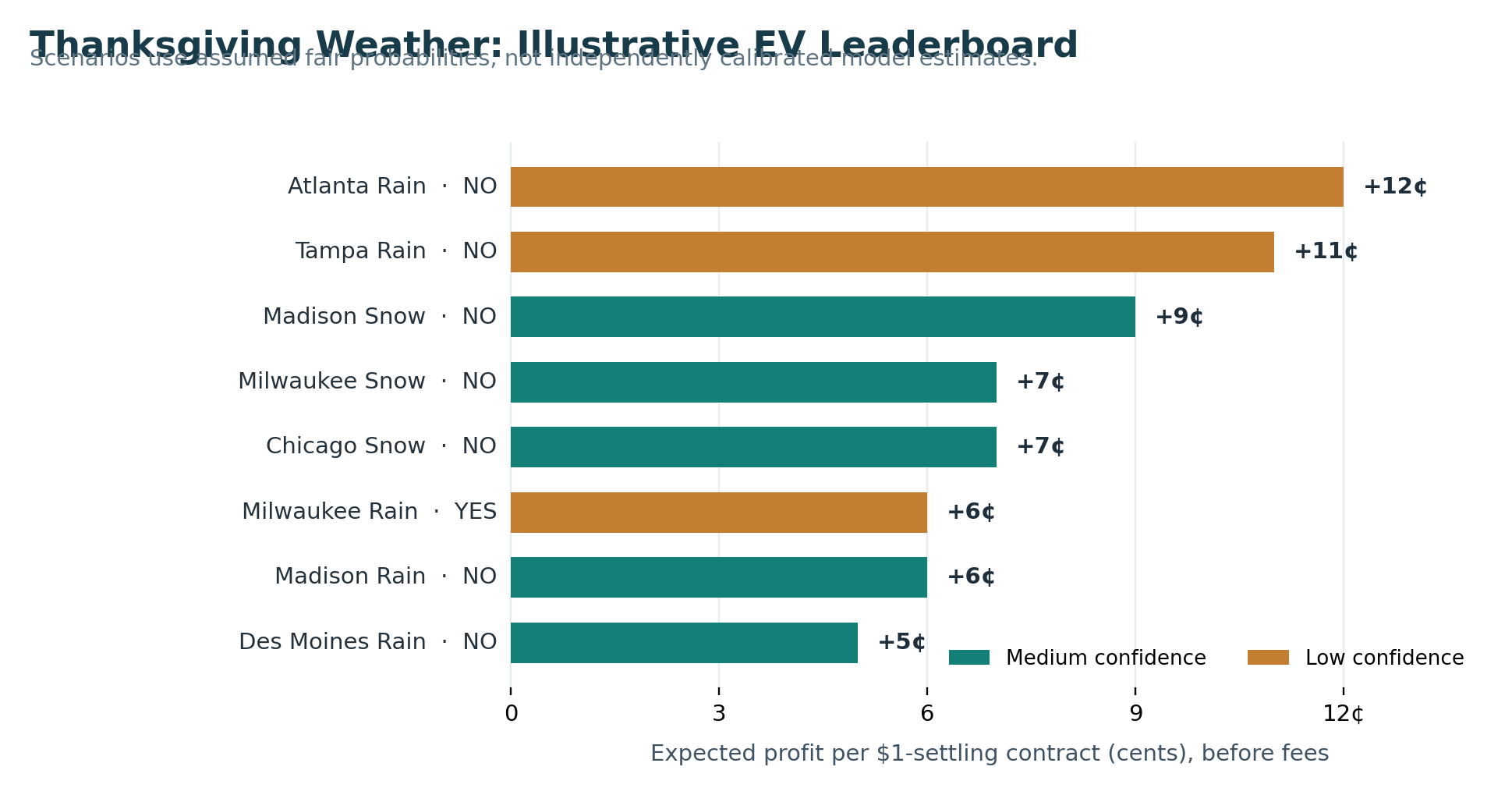
Figure 1. Scenario expected values at reviewed purchase prices. A +12¢ edge is not a confirmed forecast advantage.
THANKSGIVING MARKET REVIEW / NOVEMBER 26, 2026
Eight Contracts Ranked by Illustrative Gross EV
1 | Atlanta Rain NO | 8¢ | 20% | +12¢ |
2 | Tampa Rain NO | 57¢ | 68% | +11¢ |
3 | Madison Snow NO | 86¢ | 95% | +9¢ |
4 | Milwaukee Snow NO | 90¢ | 97% | +7¢ |
5 | Chicago Snow NO | 88¢ | 95% | +7¢ |
6 | Milwaukee Rain YES | 39¢ | 45% | +6¢ |
7 | Madison Rain NO | 90¢ | 96% | +6¢ |
8 | Des Moines Rain NO | 90¢ | 95% | +5¢ |
Fair scenario = assumed probability that the selected position pays $1. EV = fair scenario − buy price. All amounts exclude fees and slippage; Nov. 24 prices may be stale.
Potential Value #1: Atlanta Rain NO — 8¢
The market thesis is a timing mismatch. Forecasts suggest rain may be concentrated overnight, with Thursday growing drier later in the day. However, showers between midnight and sunrise still count toward a calendar-day contract, and that risk prevents a high-confidence NO call. If the probability of NO settlement were truly 20%, the contract would have a fair value of 20¢ and an illustrative 12¢ edge at 8¢. It would still lose roughly four times out of five under that assumption.
Potential Value #2: Tampa Rain NO — 57¢
Tampa is a model-disagreement case. One airport-specific NWS outlook appeared much drier than another provider’s forecast, which included morning and afternoon showers. If a properly calibrated station forecast put NO at 68%, a 57¢ purchase would imply +11¢ of gross expected value. The key risk is that scattered rain requires only a small qualifying amount at the settlement station; a dry general forecast is not enough.
Potential Value #3: Madison Snow NO — 86¢
Madison offers the cleanest high-probability setup in the reviewed list: the airport forecast stayed mostly dry on Thanksgiving. Under an illustrative 95% chance of NO settlement, the fair price is 95¢ and the gross edge is +9¢. But the NO buyer risks 86¢ to earn 14¢, and a reported trace of snow can matter under the snow market rules. That asymmetry makes accurate settlement criteria and current execution pricing especially important.
Additional Watchlist: Milwaukee and Chicago
Milwaukee rain YES at 39¢ depends on rain arriving before the local midnight cutoff, whereas Milwaukee snow NO and Chicago snow NO depend on rain occurring without qualifying snow. The snow NO prices in this leaderboard were from November 24 and should be treated as historical comparison points until confirmed in the order book. Madison rain NO and Des Moines rain NO are lower-edge, higher-priced alternatives.
MODEL INTERPRETATION / SETTLEMENT WINDOWS
The Calendar Clock Can Decide the Contract
A forecast saying “rain Thursday night” can cover hours that fall on either side of midnight. A late arrival can turn a rain YES market from a winner into a loser, even if the storm eventually arrives exactly as expected. The same logic applies to an early morning band that crosses midnight from Wednesday into Thursday. Always compare the model’s local-time precipitation timing with the market’s daily reporting window.
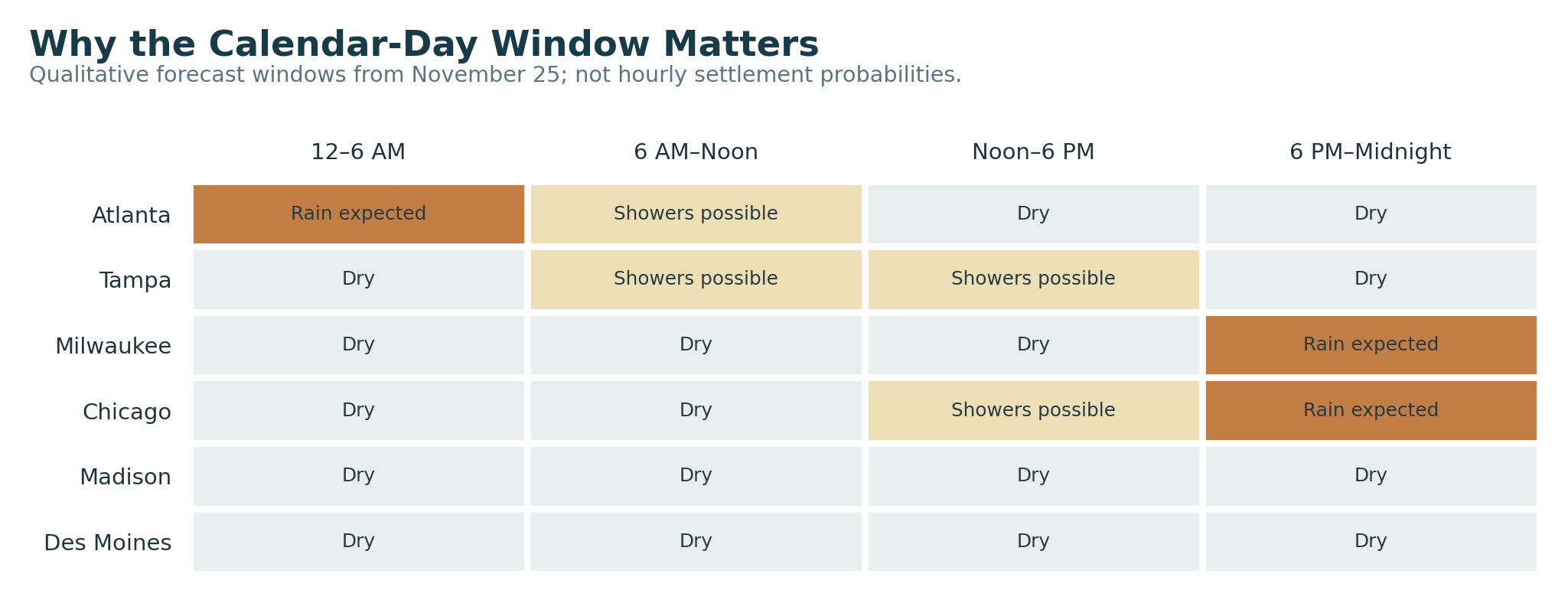
Figure 2. Qualitative timing illustration from the November 25 forecast snapshot, not hourly rain probabilities.
How to Read the EV Estimates
A contract that costs 57¢ needs a win probability above 57% plus applicable fees to offer positive expected value. A 68% scenario produces an 11¢ gross edge only if the assumed probability is accurate. If the real win probability is 54%, the same position has negative gross EV. A price discrepancy is therefore a hypothesis to test, not proof of a favorable trade.
For example, buying 100 Tampa NO contracts at 57¢ costs $57. If NO settles, the gross payout is $100 and profit before fees is $43. If NO loses, the $57 stake is lost. Under the illustrative 68% win probability, expected profit is $11 across the 100 contracts. Any trading fee or slippage reduces that estimate.
What Would Change the Rankings?
Atlanta: radar showing measurable rain after midnight would sharply weaken NO. Tampa: confirmation of a passing shower at the official settlement station would defeat NO. Madison: an overnight band producing even trace snow would weaken the snow NO case. Milwaukee: the rain shield’s northern edge and arrival time may decide both the rain and snow markets. Lastly, any change in the executable bid or ask should trigger an immediate EV recalculation.
Conclusion
The largest numerical EV does not always signal the most reliable forecast. Atlanta and Tampa are speculative timing and model-disagreement trades; Madison snow NO has a stronger dry-weather thesis but limited profit and steep downside if wrong. Fair value starts with the probability of the exact settlement event, compared with the actual executable price.
Sources and methodology: Kalshi rain/snow market quotes reviewed November 24–25, 2026; airport-specific weather forecasts and NWS discussions as described in the accompanying market analysis; National Weather Service (forecast.weather.gov). Assumed fair values are scenario inputs, not empirical model outputs or verified live Kalshi probabilities.
Disclosure: This article is educational and is not investment or business advice. Forecasts, prices, fees, liquidity and settlement rules can change. PredictQ is a marketing partner of Kalshi and may receive compensation for referrals.