
How a Prediction Market Trader Finds an Edge: Brett Hartfiel Interview
A Q&A with Brett Hartfiel
The Prediction Market Show, Episode 1 · PredictQ
Source interview: YouTube — How a Prediction Market Trader Finds an Edge | Brett Hartfiel. Lightly edited for readability and adapted from the spoken conversation to written form. Wording is otherwise preserved.
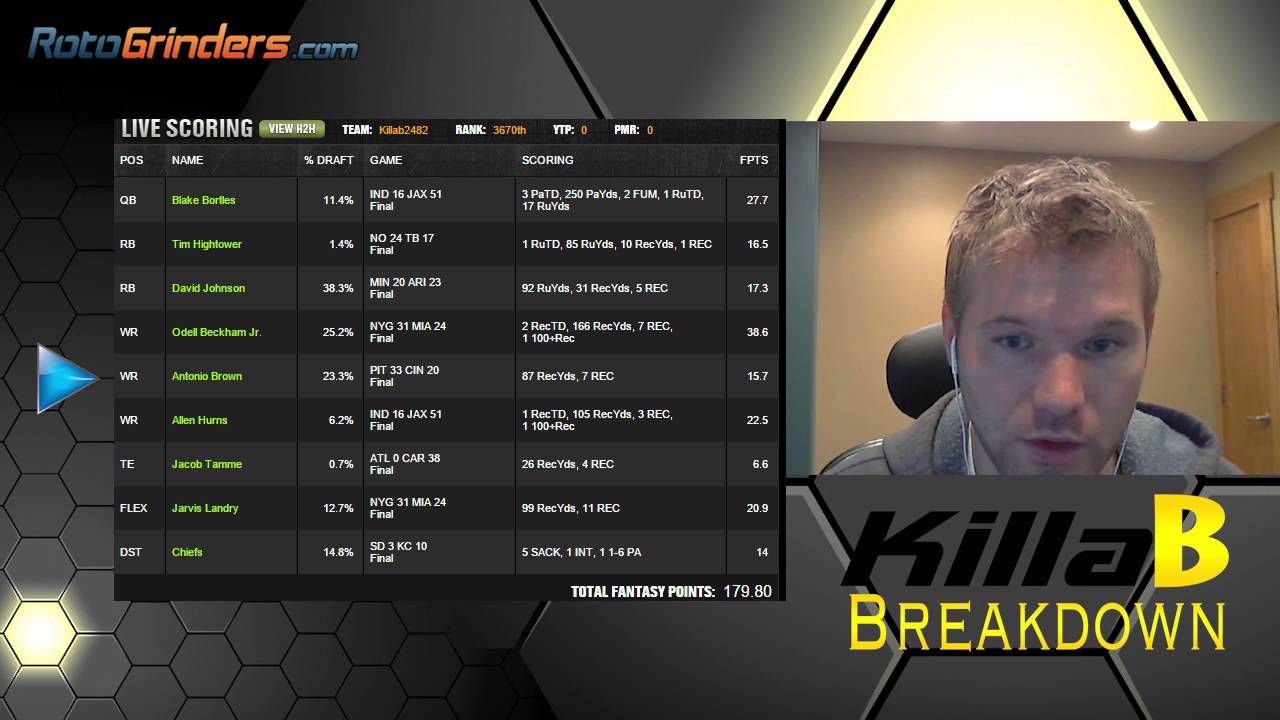
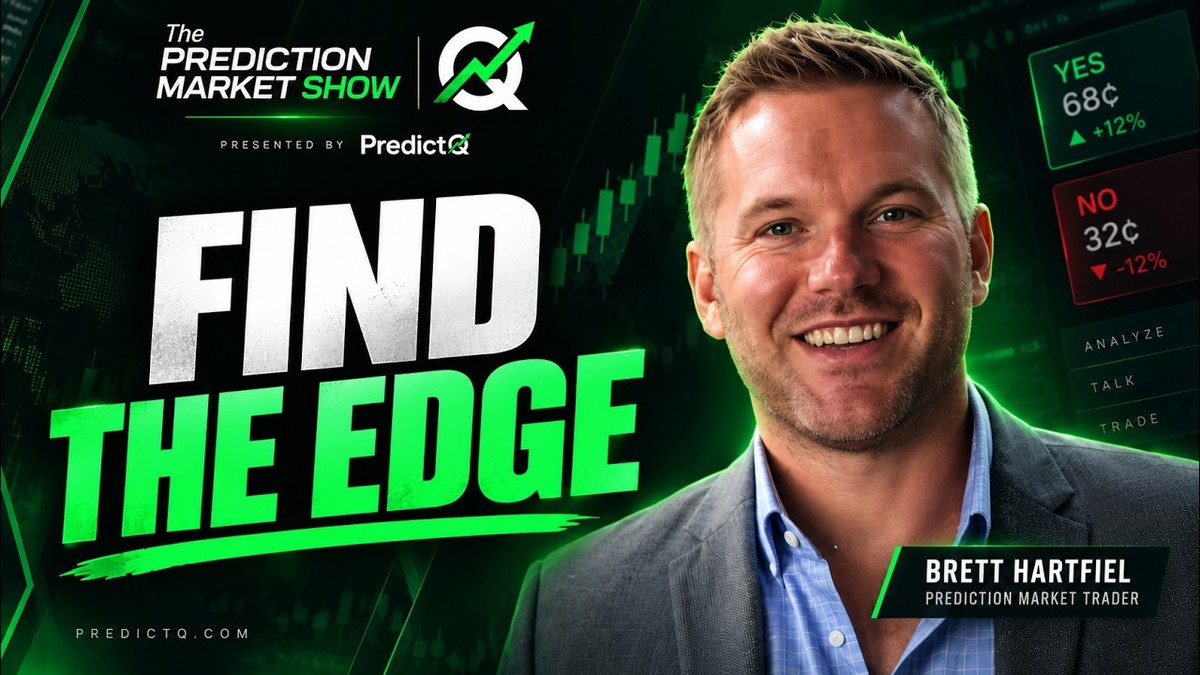
Brett Hartfiel — known in the industry as Killab — has spent more than a decade making a living where information gets priced. Poker was the first stop after he graduated from the University of Wisconsin Madison, and it stayed his primary income through around 2012. Then daily fantasy sports took off, and Brett rolled his poker bankroll straight into DFS, becoming one of the early names to build a real team around the craft. Sports betting followed. Now he's spending most of his time trading prediction markets across Polymarket, Kalshi, and Novig — babysitting quotes, running his own NBA projections, and treating each position much more like a trading position than a one-off call.
Cameron MacMillan, Co-Founder and COO of PredictQ, has known Brett since the early days of RotoGrinders. Brett was the first player Cameron met who traveled with a full team — the story of Brett taking over the RotoGrinders conference room in Nashville to build lineups is still one of Cameron's favorites. More than a decade later, they got back on a call to trade notes on where prediction markets are today, how experienced traders think about probability and information, and where the industry is heading.
Watch and Listen to The Interview Here - Read Below
Cameron: You're still active in daily fantasy and sports betting. I believe you just made the WNBA final?
Brett: Yeah, on DraftKings. I've dove into some WNBA slates with four-plus games. Randomly won a qualifier in one, and last Saturday was the final — a 50-man final. Ended up taking second. Always fun to have a random sweat in a WNBA slate right before NFL season starts.
Cameron: You've also dabbled in poker, stock market, and angel investing. Give us the macro overview of your background.
Brett: Right upon graduating from Wisconsin I dove into poker. I had corporate options and parents who wanted me to take a job, but I stuck with poker. That was my main source of income through maybe 2012, then I started up with DFS. I rolled my bankroll from poker to DFS, and as that was going crazy I got more invested. Now I'm figuring out how I want to invest this year. I'll be lowering my DFS — more or less focusing on tournaments. I still have basketball slow drafts queued up, but I'll focus mainly on tournaments for DFS, then a lot of prediction market stuff. I'm looking to get as much money down on the prop side as I can, though I don't know what will officially be offered. I've been diving into college football, and it seems like props aren't fully offered on a lot of the sites yet.
Cameron: A lot of daily fantasy people gravitate to props because DFS is really about projecting players. For readers new to prediction markets, explain it like they're brand new. In DFS you're optimizing a lineup against a salary cap in a tournament or head-to-head. On prediction markets you're sizing against your bankroll, posting or taking on open markets. What's the strategic difference between the two mindsets?
Brett: Prediction markets are very much like a trading platform. Because of the fees involved, you really want to make as many markets as possible. Fees vary by platform and by whether you're making or taking, and that cuts into margins — so I've been making a lot more markets, where you have to babysit them if news drops. That's the main thing — knowing which markets you have out there. A lot of them, once the game starts, go live. I made so many mistakes early on where I had a live market and when the game started it was still live. You've got to be aware of how each platform handles fees and be intentional about which side you're taking on which venue.
Cameron: It sounds like you're heavily on the making side, and you'll take occasionally. What's the percentage split?
Brett: On Novig I'm taking quite a bit. But I only make a market now on Polymarket and Kalshi — I avoid taking there unless I want to hedge off different bets. Sometimes even mid-game hedging. There was one big day on Kalshi and Novig where I had about $90,000 down when Giannis was coming back and I had his minutes played that game around 24–26, a little higher up. So I was betting big on the Bucks, but I knew I wanted to hedge out because at the time my unit size was about $5K, so I had tons of units on that. I hedged out a little throughout the game, but it's still about getting the best price.
Cameron: Hedging is coming up a lot lately. Justin, our co-founder and CEO at PredictQ, is excited to hedge some of his Best Ball portfolio on certain players. The Kalshi CEO has been preaching hedging well beyond that — hedging your house against flood insurance, for example. What's your take on prediction markets as a hedge or insurance tool?
Brett: With live-game hedging, you've got to put these hedges down when the game is basically stopped, or you feel pretty good there's no action in play. Because plenty of times, even if you're watching a live broadcast, you're maybe 30 seconds behind live play. So hedge during timeouts, end of quarters, big breaks in action. That way you're getting true odds across the market.
Cameron: One of my favorite stories about you goes back to the early DFS days — 2014, right around when names like Condia and Maxdalury were rising. You were the first person I met who had a full team. You came to the RotoGrinders office during our Nashville party and took over the conference room to work the slate. Is that team model something you're taking forward into prediction markets?
Brett: No, now I'm just by myself. Back in the DFS days there were so many sites, so much going on. We were all learning in the early days — 2012, 2013. I remember if I beat Condia in a lineup for a week, it was going to be a profitable week, because we were in everything together — all the three-mans and all the five-mans. Different times now. I'm just focused on my own personal bankroll. Back then, coming over from poker, I had a lot of poker friends that wanted to invest in my DFS play, so a lot of the initial DFS bankroll was mine and a lot of fellow poker friends'. Nowadays it's just strictly my bankroll.
Cameron: And there's AI, software tools, subscriptions now. Back then we were manually uploading CSVs — I don't remember if the CSV upload was even live yet. You'd have to use a lineup editor.
Brett: And it was before the 150-max days, where you could put in whatever number of lineups you wanted. You had people just going mass multi-entry back then. On that same Nashville trip in 2014 I met BeepImaJeep and Jay Raynor, and we started a company around the new sports betting industry called LineCrush. Beep is so contrarian and such a hardworking guy. It's very AI-driven.
Cameron: Anyone who's met Beep knows he's one of the brightest people I've encountered on this journey. Back to prediction markets — you've got a ton of experience with poker, DFS, and sports betting. How are you finding edges in prediction markets compared to sportsbooks or daily fantasy?
Brett: With prediction markets, a lot of what I'm doing is top-down — trying to find the price discrepancies that stand out across the industry. If there's nothing major, I dive into the player side. I've always been good at finding elite projections. I do my own NBA projections, but everything else is finding who has the best data out there and working that into whatever I'm betting. So with prediction markets I'm making a lot of the markets based on what I see as bigger edges, and comparing lines across the industry. That's huge.
Cameron: So you're building in-house NBA models and outsourcing others.
Brett: I've run my own NBA models since about 2015. Learned modeling through Drew Dinkmeyer, and Justin Phan — the way he would process everything. That's been my main sport that I project. NFL I've never run with my own projections — I utilize what's out there. People do it so well anyway. But NBA, you kind of have to run your own set of something to get off what's chalk in DFS. That's why I've always run my own. It makes me feel good when I have big-time discrepancies against what the crowd is doing.
Cameron: You can sleep better at the end of the night knowing you built your own. We've built our own projections at RotoGrinders — it's crazy how much work can go into it. Either you sleep better, or you learn something that improves the model moving forward.
Brett: For sure. Derek Carty's projections for baseball and football are so good, and the ETR guys are usually top-notch with basketball and NFL. It's all about putting in the resources, and now it's about teams — you've got to have so many people. In basketball especially, it's such a news-driven sport that everything happens so quickly. To project it takes a lot of time.
Cameron: What's your biggest win in daily fantasy, and your best day in prediction markets so far?
Brett: For DFS it would be the Millionaire Maker. Last day of November in 2022, so about three and a half years ago. I had two entries of $2,500 and one banked the top spot. It was a little over a thousand people in it. That was my biggest bankroll boost for sure. For prediction markets, I had really good stretches in February — a couple of weeks right around $100K. My best day, I had about three days north of $50K around the March Madness era. The problem with set units — early on in the year I had $5K units, and the problem is just getting $5K down on everything you want to bet. You have different prices. I might only be able to get a few hundred bucks down in certain areas. What I've started to understand is: I can't get X unit down on everything I want to bet. Is it smarter to go down in unit size? That way a few outcomes doesn't hamper your whole day. So I've had to lower my units in certain sports because I'm having trouble getting down certain unit sizes.
Cameron: You've touched on bankroll management. How do you deal with the swings, the variance of doing this full-time for so long? And Levitan's fun side question — what do you tell people you do when you meet a relative at a wedding?
Brett: What I tell people is all relative to who I'm meeting. An older person, I'll just say, "Oh, I'm in sports analytics." That's the classic now. Levitan has said that multiple times. Back in the day with poker, I'd tell people I was close to, but I'd always just say, "Oh, investments" — not fully divulge.
Cameron: Any tips for readers on dealing with variance? You've been successful long enough to make it this long without a job.
Brett: I've run bad and I've run good, and you can always run worse than what you think. The main thing is to always stay in your bankroll and readjust your bankroll. With bad stretches — and with upstretches — anytime you start running good, take money out of the bankroll and invest it in other spots. That's what more than anything has kept me even-keeled. Understanding, "Hey, I'm doing well, but at any point you can run bad and you're going to need to replenish your bankroll." It can be bad for stretches at a time. I've always felt somewhat dead inside when you go through these stretches, because I try not to get too high on my highs or too low on my lows. It's no way to go through as a professional gambler.
Cameron: Good advice for life, too. When you're looking at a prediction market, are you looking for something mispriced, or are you more on a posting angle trying to get in at a certain price? What's your thought process for entering a market?
Brett: Mispricing is one big thing I'll notice. Usually you don't get a massive mispricing, but news-driven sports — if you can be super quick on any news, it doesn't even need to be at a macro level. It can be player-based, because those player-based levels stay out there longer than the macro side. Any big NBA news — if a big name is ruled out, understanding instantly what that means for other players on the court, being able to scoop up those bets or make those markets right away. It's crazy how much action you can still get if you react to news super quick. Each sport is different. There's not as much news-driven with football, but more and more it has been, with understanding practice reports each day and lowering or raising somebody's projections based on their availability. Mispricing is normally where I start with all my bets.
Cameron: Are you watching bets live and considering cash-outs more often in prediction markets, or seeing them through?
Brett: I see them through almost all the time. It's just when I make a note of it, or if I'm making a bet specifically knowing I intend to hedge — whether from my analysis of the game, an injury, or just because I have such a large bet down. I'm not hedging unless I'm setting up to hedge. And a lot of times I naturally hedge throughout the day — I'll look in my pocket and see, "Oh, I've naturally hedged here." I'll have ladders I've naturally bet at different spots. So a lot of the time it's not even me deliberately doing it — I just catch two mispricings on both sides, or I have a quantity of bets to get a full unit down.
Cameron: You've now watched DFS go mainstream, poker go mainstream, and sports betting go mainstream. Do you feel like this is the same moment for prediction markets on PredictQ?
Brett: Yeah, I do. There's always reservation with any type of gambling because you have to run good with politics and the legalities state by state. This is the part of never trying to get too excited, never going full in on something, because at any point in time legally things could change in your state, from a federal level. I'm excited because it's new territory and we're all learning together. But still reserved because it's still gambling in a sense, even though it's been intertwined more with investments and trading.
Cameron: Outside the trading itself, life doesn't stop — you've got a wedding coming up. Where do you think you'll be spending your time percentage-wise going forward — between poker, DFS, sports betting, prediction markets, and angel investing?
Brett: My personal life right now is pretty busy — I get married September 24th. So I'm hosting a lot of family and friends. DFS takes a lot more thought with building lineups. I do plan on throwing in tournament lineups, but most of my action is just going to be on prediction markets, because it's so simple and easy to pull up: "Oh, this is why I have an edge," and then make a bunch of markets. Not as much thought as a tournament. I have so much experience doing NFL — it's not a solved game, but cash-game wise I'm not all about the 2v2s. I'd rather use my cash-game money for the prediction market side — doing props, taking sides. There'll be some cool leaderboard stuff with Polymarket, Kalshi, and Novig's platform. I just got an offer on FanDuel for some type of DFS deposit. You always have to see what everybody's offering to figure out where you're going to put your final action. But DFS tournaments and prediction markets — that'll be my main focus.
Cameron: You always have to look out for those bonuses. Going back to market making — this was something that confused me a lot when I came in, and I trade stocks. I was retired for three or four years before doing this, having fun in the stock market, and it was still confusing to me. I knew how to do limit orders, but let's explain it for a new user. You want to go in and make a market or create some lines. How do you go about doing that?
Brett: You find whatever market you're betting. Find what price. There are always windows for every market — the buy window and the sell window. When you're making a market, you find the price you want. When you get down to props, that betting window is a lot wider. For an NFL market — sides — there's no window whatsoever. It's super tight. But props can have pretty big windows. So for example, Jayden Reed — his yardage prop is somewhere around 45.5. At 45.5 it might go from -110 to +105. The settings are going to be different for each market. Novig has gone over to a percentage. Kalshi has a percentage. You've just got to make sure you know what the percentage equals for American odds. The windows are going to be pretty big for props, so you can make a market at different prices. I have lots of spots where I end up having a ladder. A ladder is where let's say I do Jayden Reed at 43.5, 45.5, 50.5, all the way up. I have a bunch of different bets — I just like his overs, so I'm finding good pricing at each yardage marker.
Cameron: Where are you clicking exactly on the site to do this, if I'm a new user and I've just registered?
Brett: A lot of times there are search bars. On certain sites you have to click into the game to get to the player you want. Other sites you can just type in the player and all their bets pop up. Let's say I have an odds screen and I see Jayden Reed — I'm bullish on his yardage over, his catches over, and I want to bet that across the industry. I'll then pull up where I'm getting the best price. Some websites you have to click into the team to get the yardage or catches to pop up, but everything comes up right after that.
Cameron: That was confusing to me at first, too. A lot of readers will appreciate that.
Brett: My mistake a lot of the time — right when I first went on Kalshi — I wanted X amount of dollars down and it took me a minute to internalize that it's a book, it's a trade. Matt Kalish, DraftKings co-founder, was one of the people who helped frame it for me. You're getting X amount at this price, then it moves, and now you're getting X amount at that price. If you're just buying up a bunch of action, you're getting it at different pricing. So I started just buying shares so I can see exactly what I own, and always opening the book so I can see how many shares are at each price. Very important, especially in props, because you're going to get wild prices at different areas. That's something a lot of new people don't understand — this really is trading. It really is like the stock market. You've got to get into the book, get in the weeds a little more, and not just do market orders at the liquidity some of these are at.
Cameron: A few rapid-fire questions to wrap. What non-sports markets are you targeting, or are you only focused on sports?
Brett: I've made some weird bets during Academy Awards season. A couple of years ago I got on PredictIt — definitely political landscape. I hit up presidency. And every once in a while Florida gets hit by a random hurricane and I was betting on hurricane stuff.
Cameron: I can relate — we're deeply impacted by hurricanes where Justin and I live. You touched on politics and Oscars, which are two things we'll be covering on PredictQ moving forward. I'm not into politics — I'm pretty non-tribal — but I'm excited to cover it. I find that aspect very fun.
Brett: The biggest thing about betting — you see people bet with their heart over their brain so much when it comes to politics. It's pretty crazy.
Cameron: That's the tribalistic thing. I think you saw it in DFS. People often ask, "Who's your favorite?" I get that question a lot. I played DFS for about seven years as a profitable player. Lost my eighth year and took a backseat to focus on entrepreneurship. It got tougher in the later years, but people would ask, "Who's your favorite NFL team?" and I'd proudly say, "I don't have one." That's why I think NFL is my best sport.
Brett: Whoever's made you the most money. That's it.
Cameron: Right. Florida Gator football, different story. What's your worst bad beat? Everyone loves a good bad beat story.
Brett: Worst bad beat — it would have to be some high-variance stuff. Every year there's one that pops in my head. One of the very first tournaments I went to at the World Series of Poker — a 5K 6-max tournament. I was chip leader with 55 people left. On the button with ace-three. Flop ace-9-3, turn ace, river didn't matter, busted hearts. Guy that was maybe third or fourth in chips had ace-9. Only two hands can beat you there. If I fold I still have near chip lead. Such a weird spot — I don't see a bluff in his range, but I was beating half of his value hands too. There's no way I can fold this. That was probably the biggest one that sticks in my head.
Cameron: That one stings. Speaking of which, friend of the site Joey Ingram — we talked with him a little bit. The World Series of Poker had a couple of markets for the first time. Do you think that's something that could emerge — something you could bet or trade on in the future?
Brett: It's kind of cool if you're the player — I don't know the liquidity that would be involved, but it would be pretty sweet to be in the tournament and be able to hedge off a high-variance spot. It's always a liquidity thing. Nick Nguyen has always run an auction for the World Series of Poker, and I like that style more — you build a team, everybody's got a price, auction-based. But prediction markets — if there's a group of people that would love to bet on it, it would be poker players for sure.
Cameron: As we wrap up, anything you want to shout out or promote?
Brett: I'll promote me and Jay Raynor's site, linecrush.com. It's basically an AI site that helps you do any type of betting across prediction markets and sports bets, and gives you the best price. We have a vibes area that gives out the best bets for the day, all based on AI that scans news, player and coach interviews — so you're getting in-depth with what's actually happening live to find these edges. We're also doing a survivor on LineCrush — a $2,500 free roll, NFL Survivor pool.
Cameron: How can readers join?
Brett: Go to LineCrush, or find Jay Raynor's Twitter, or mine — Killab2482. I have LineCrush as the header on my Twitter.
Cameron: Big fan of Jay — I've seen the product and it's awesome. Excited to hear you'll be covering prediction markets. Appreciate your time. Hope you have a great wedding and another two decades of success as a professional investor and trader.
Brett: Thanks, man. Always good to reconnect. Rooting for you and Justin to crush it with this new company.
This article is an interview about how one trader approaches prediction markets. It is not a directional prediction, a trade recommendation, or investment advice. Prices and odds shown are point-in-time and may change. PredictQ is a marketing partner of Kalshi, Polymarket, and ProphetX and may receive compensation for referrals.